Data Center
Day Care
Very few people have ever seen the inside of one. They are stunningly beautiful — technological cathedrals. So obviously the next step is toddlers. Lots of toddlers.
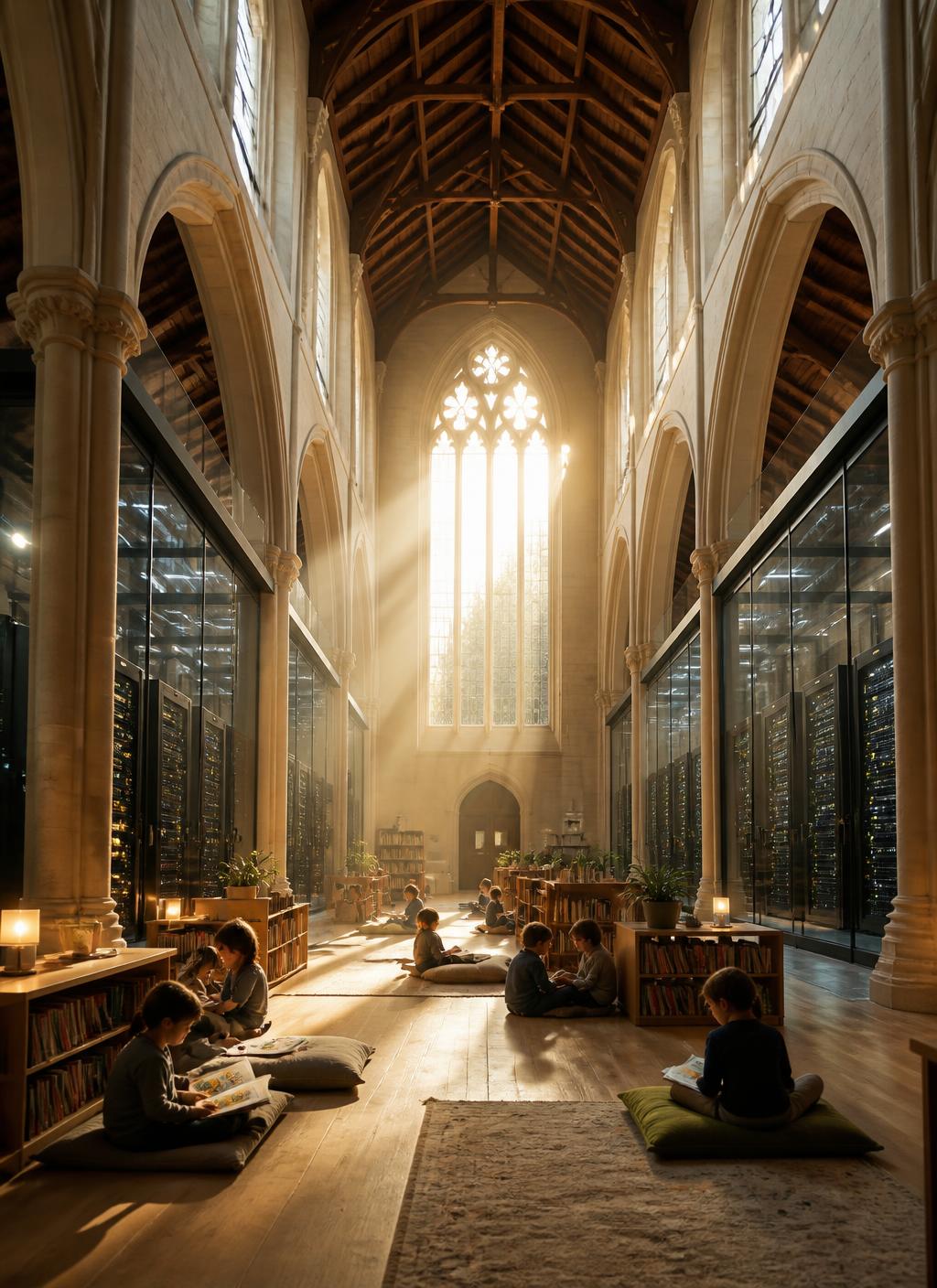
(01) The Technological Cathedral
You walk inside, you see the complexity, all the servers humming, and it feels like a cathedral. Cathedrals had children running through the aisles. Data centers have armed guards and a man in a golf cart who hates eye contact. One of these is a civic institution. The other is a missed opportunity.
Is there a way to design a data center that invites the public in and provides a public service? Yes. Is it slightly unhinged? Also yes. That is the point.
The Public Library Inside The Machine
Children reading picture books while the internet hums through the wall. The librarian is also a site-reliability engineer. Shhh means shhh.
Internet So Fast It Is Suspicious
You are standing at the source. Download a movie before you finish blinking. The speed will make you feel watched. You are not. Probably.
Free AI Tokens For Every Toddler
A monthly compute allowance so your kid can train a model to recognize their own drawings. This is normal. This is what the Founders wanted.
A Courtyard. A Garden. A Day Care.
Skyscrapers give back plazas. Data centers can give back courtyards where children nap within earshot of a thousand GPUs.
Tear down
the fences.
Some of them need the security. Not all of them. Access restrictions can end at the server hall door instead of at the road, and everything on the near side of it can belong to the neighborhood. The cloud does not have to be a fortress. It can be a slightly over-cooled community center with very good Wi-Fi.
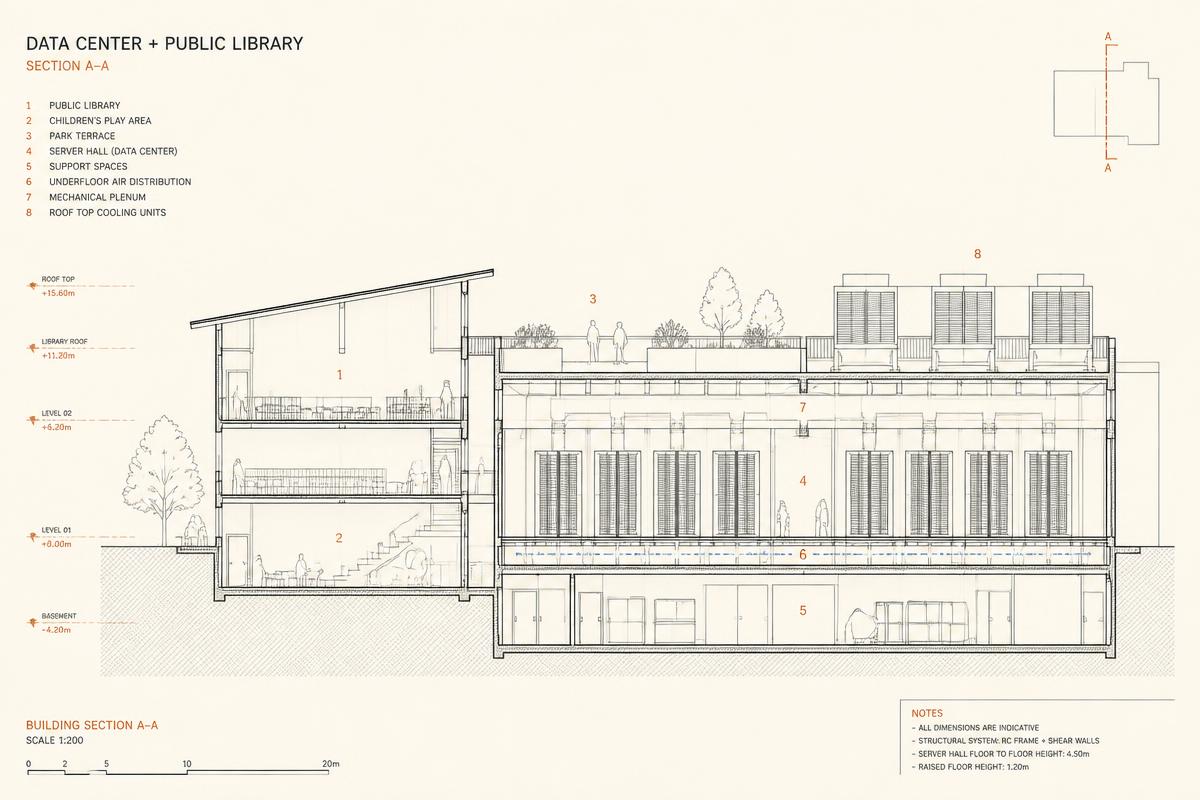
“When Matt first said it, we thought he was joking. Then he said it again. Then he said it a third time, slower. Now I have a library card for a colocation facility.”
- ✦They said it could not be done.
- ✦They said the uptime SLA would not allow it.
- ✦They said children near servers was 'a liability'.
- ✦They were wrong. Or maybe they were cowards.
It's open source, so anyone can take this idea.
We do not build the buildings ourselves. We are running the idea by the people who do — and publishing everything we learn. If you are an architect, a cloud provider, or simply a person who likes absurd things taken seriously, get in touch.
Run this idea by us